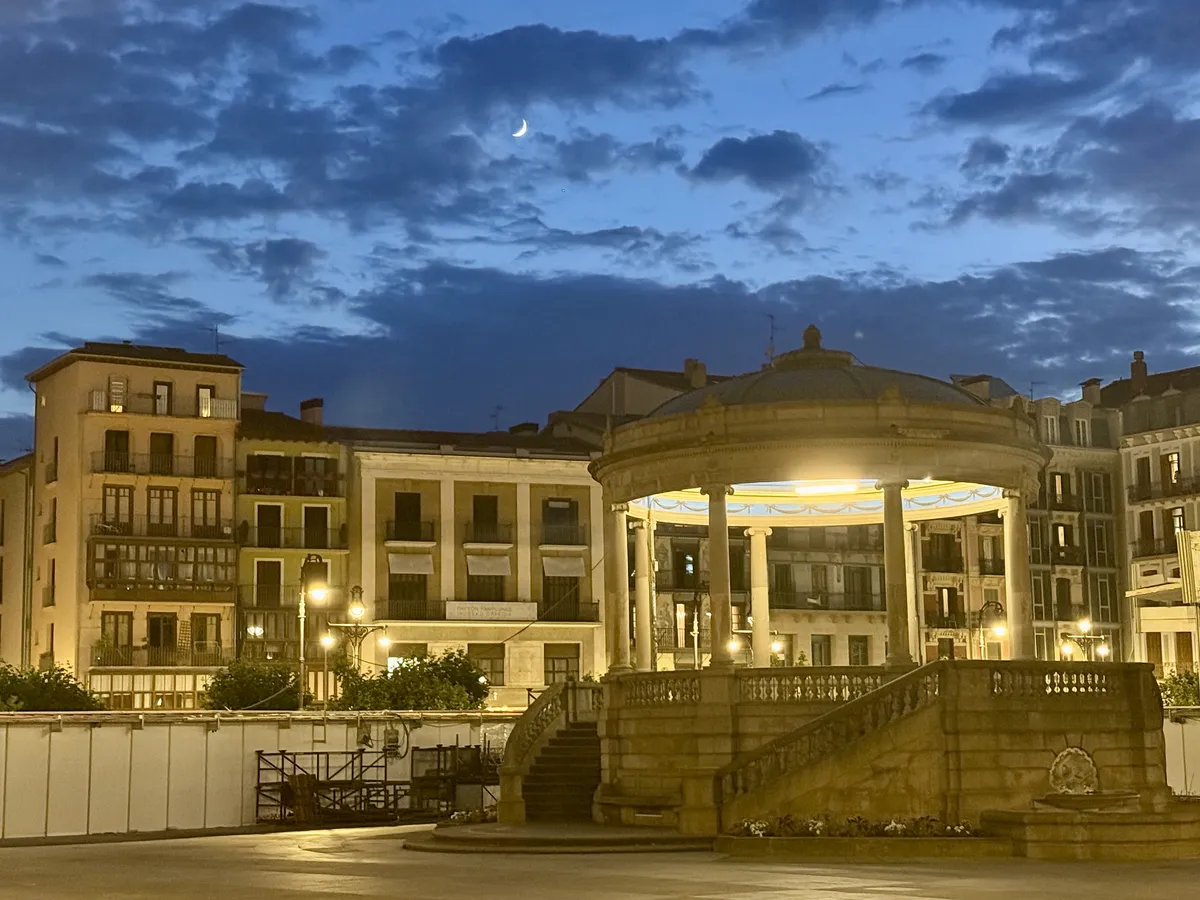
an experiment in spain - day 3: GEOMED!
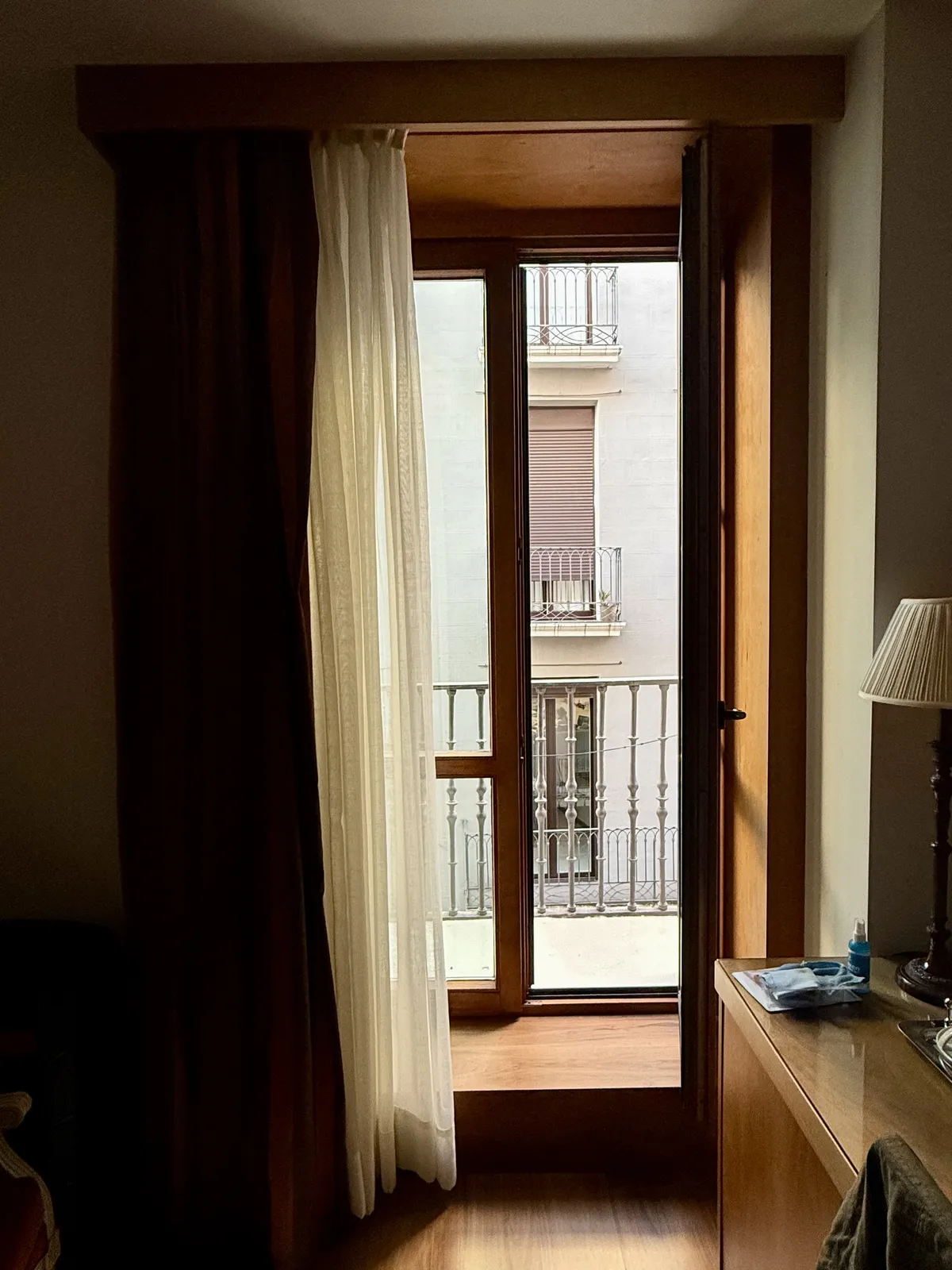
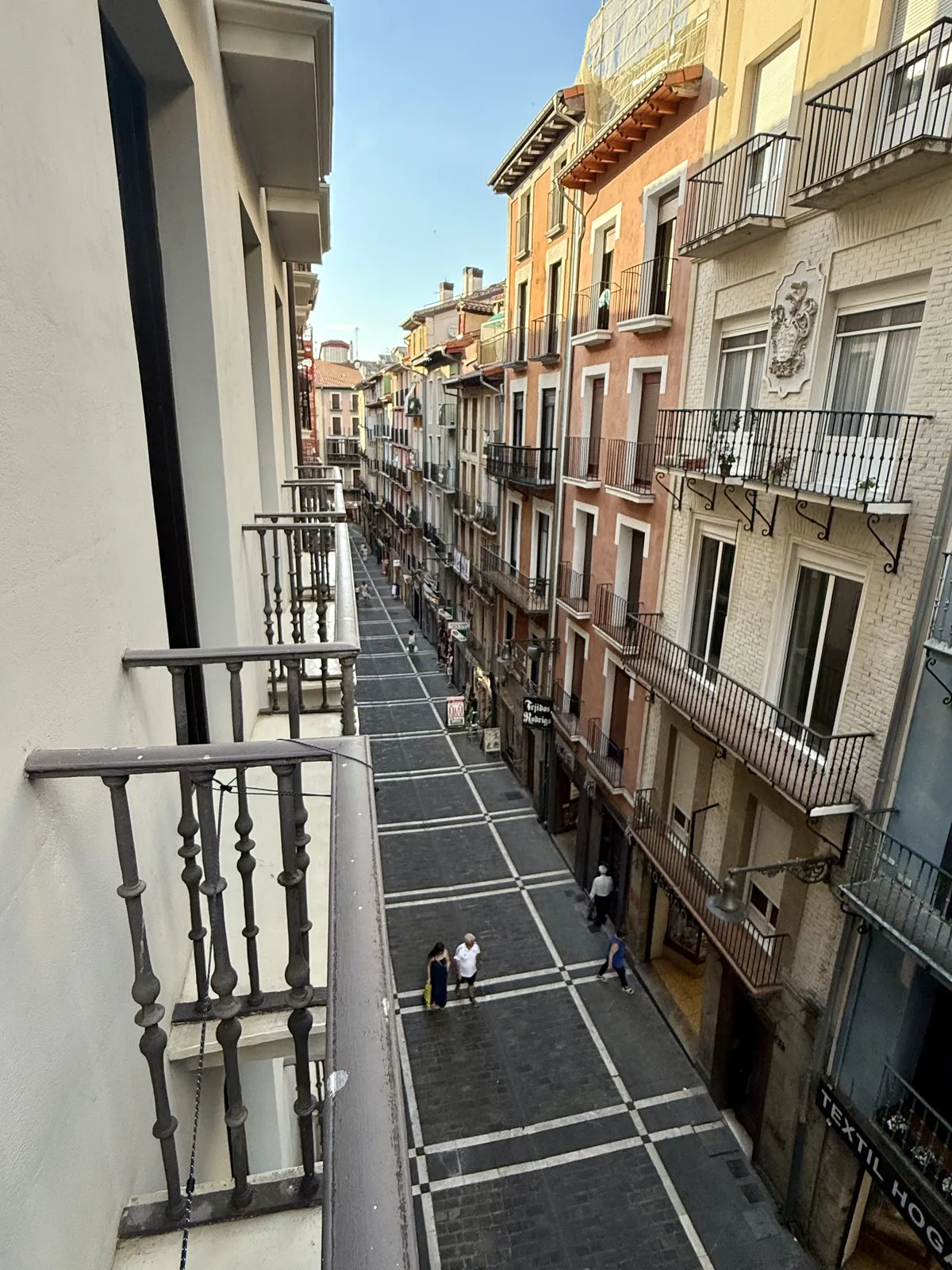
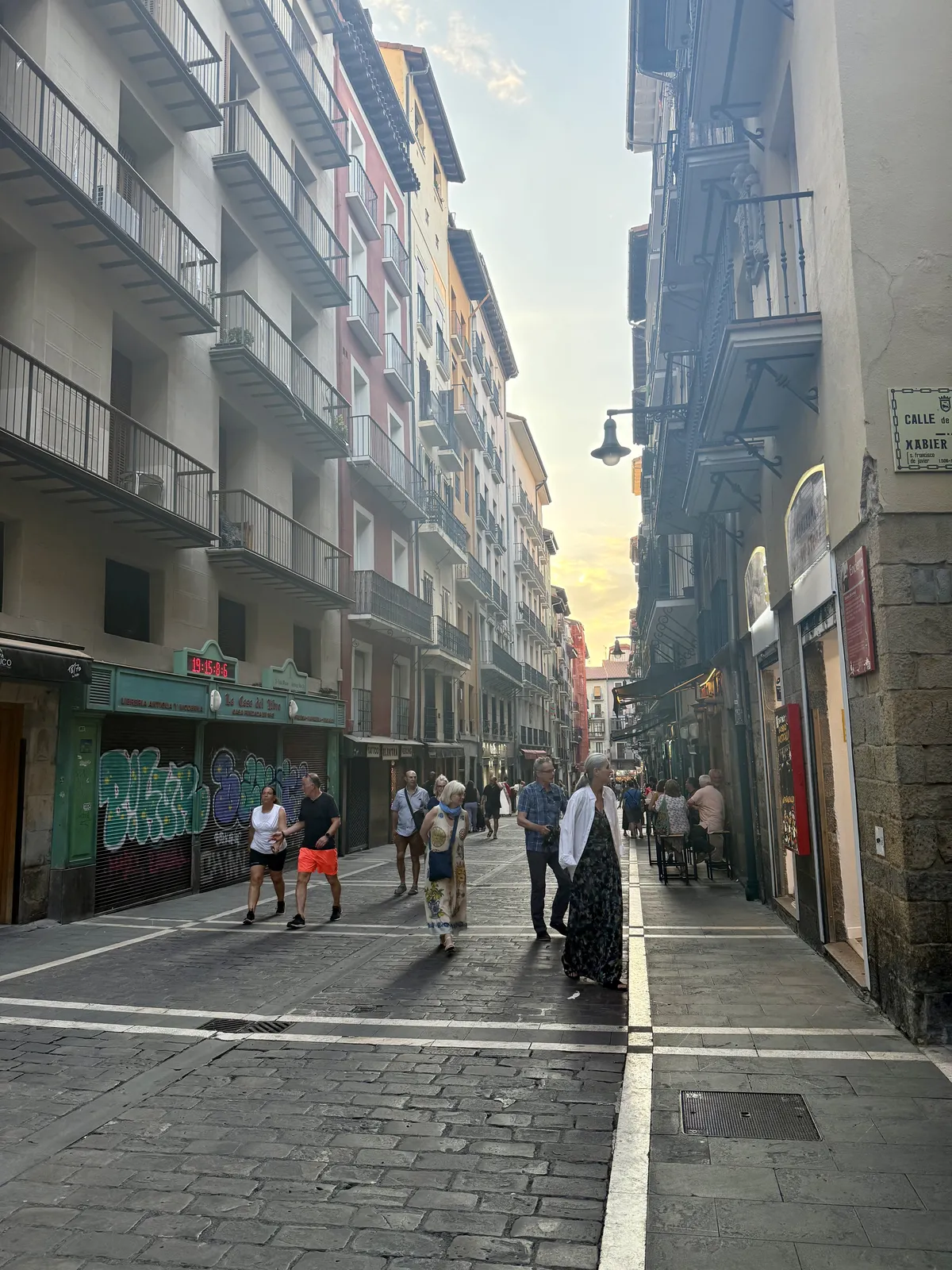
The balcony of my room overlooks Calle de la Estafeta, a street that is the longest straight section on the Encierro - the running of the bulls. Pretty cool.
Spanish iced coffee
It’s very hot here. And while there is air conditioning, it seems like it is used just enough to keep one from roasting, but not cool enough for the base of your neck to stop sweating. When I first walked into my hotel room yesterday, I saw this large batman-like red light next to a button immediately on my right and was just itching to press it when the hotel man said "Whatever you do, do not press that button." ...which naturally made the appeal nearly irresistible but I mustered the restraint to ask "Why? Does it call an ambulance or the police?" To which he said "No. It turns off the air conditioning."
It was just as toasty at the conference, so I decided to take a break from an afternoon session and went to the cafe. I ordered an iced latte. Here is what I got:
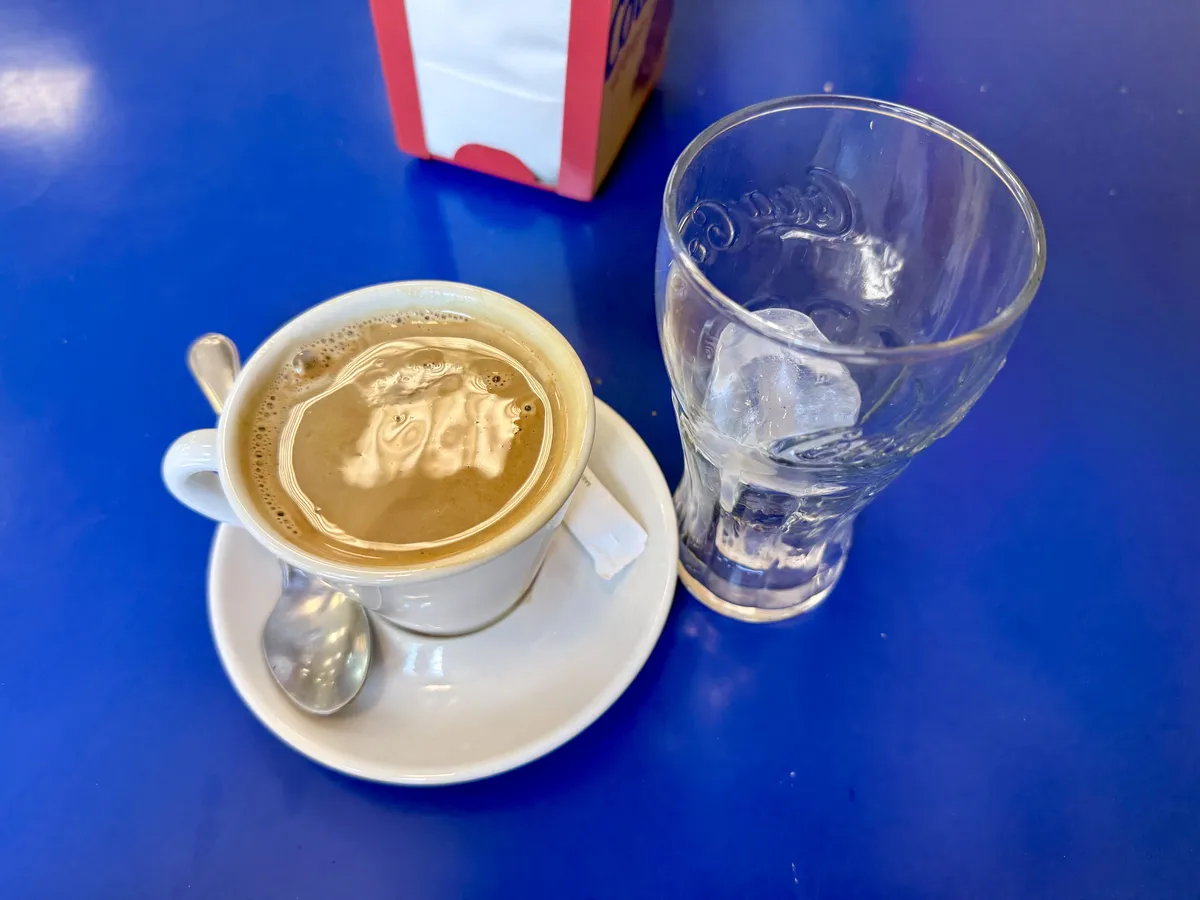
It went about as well as one might expect. But it was cold. And in this heat, cold has a taste.
geomed
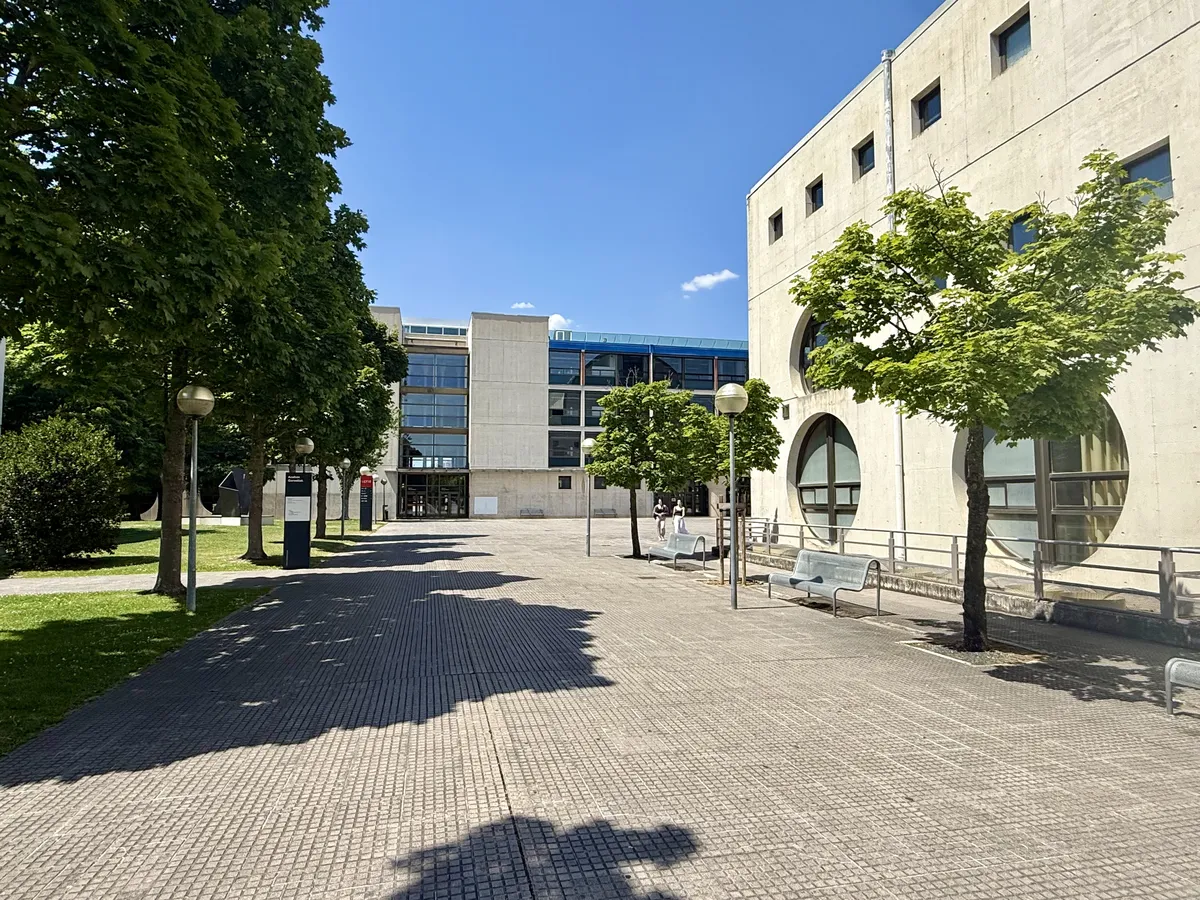
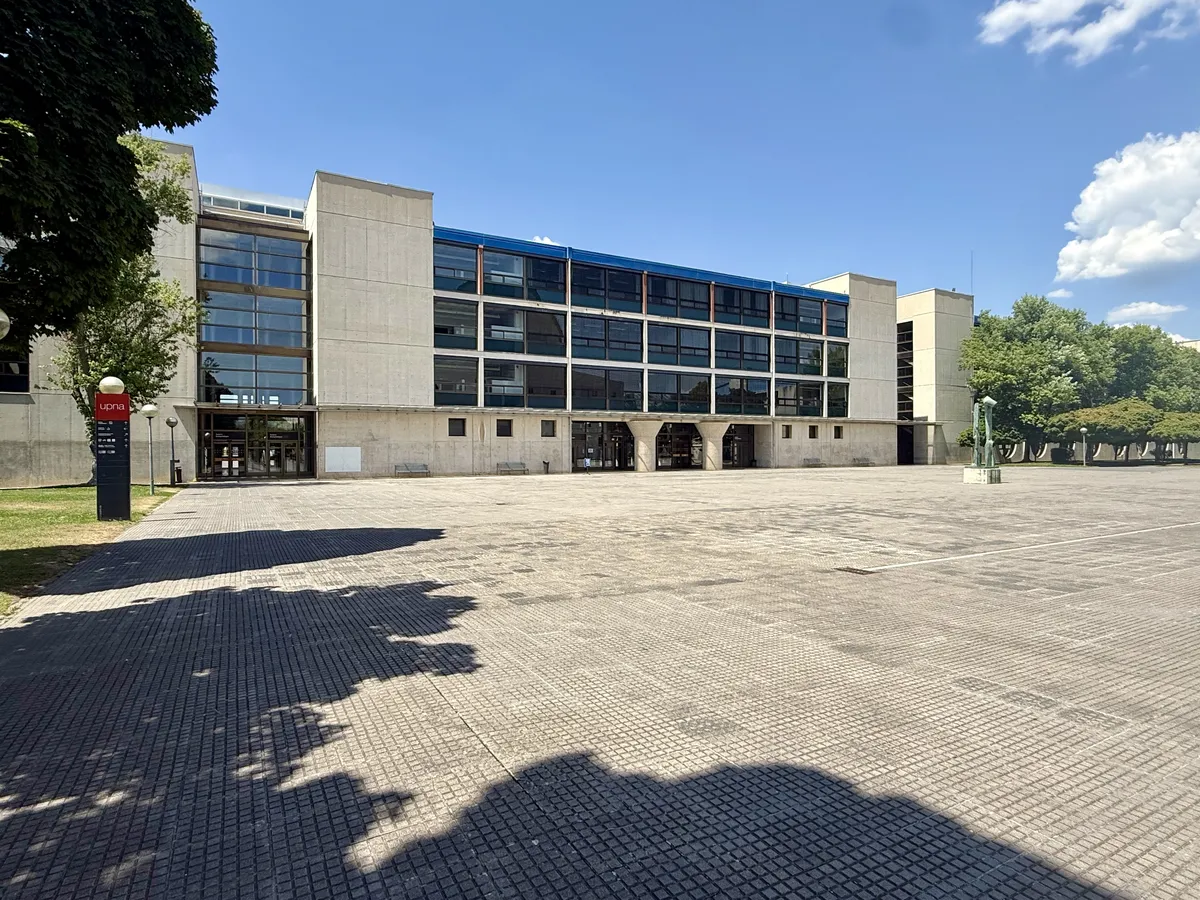
GEOMED this year is being hosted by the Public University of Navarre (UPNA), here in Pamplona, Spain. I attended this conference in 2024 in Hasselt, Belgium and really enjoyed it. GEOMED is a bi-annual conference focused on spatial epidemiology. It's intended to present developments in methodology and its' applications in public health. In other words, my jam.
the ‘brutal’ in brutalist architecture
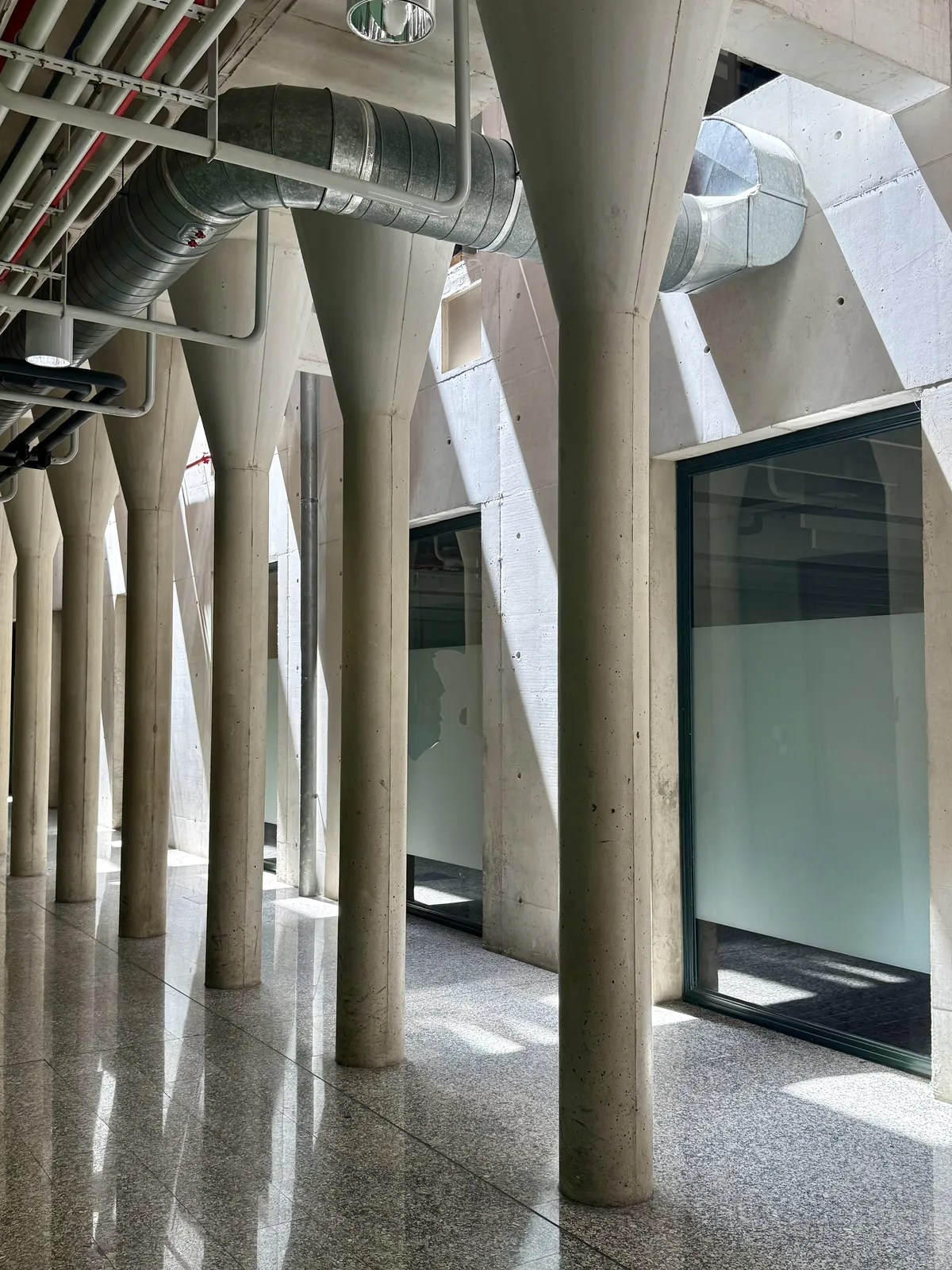
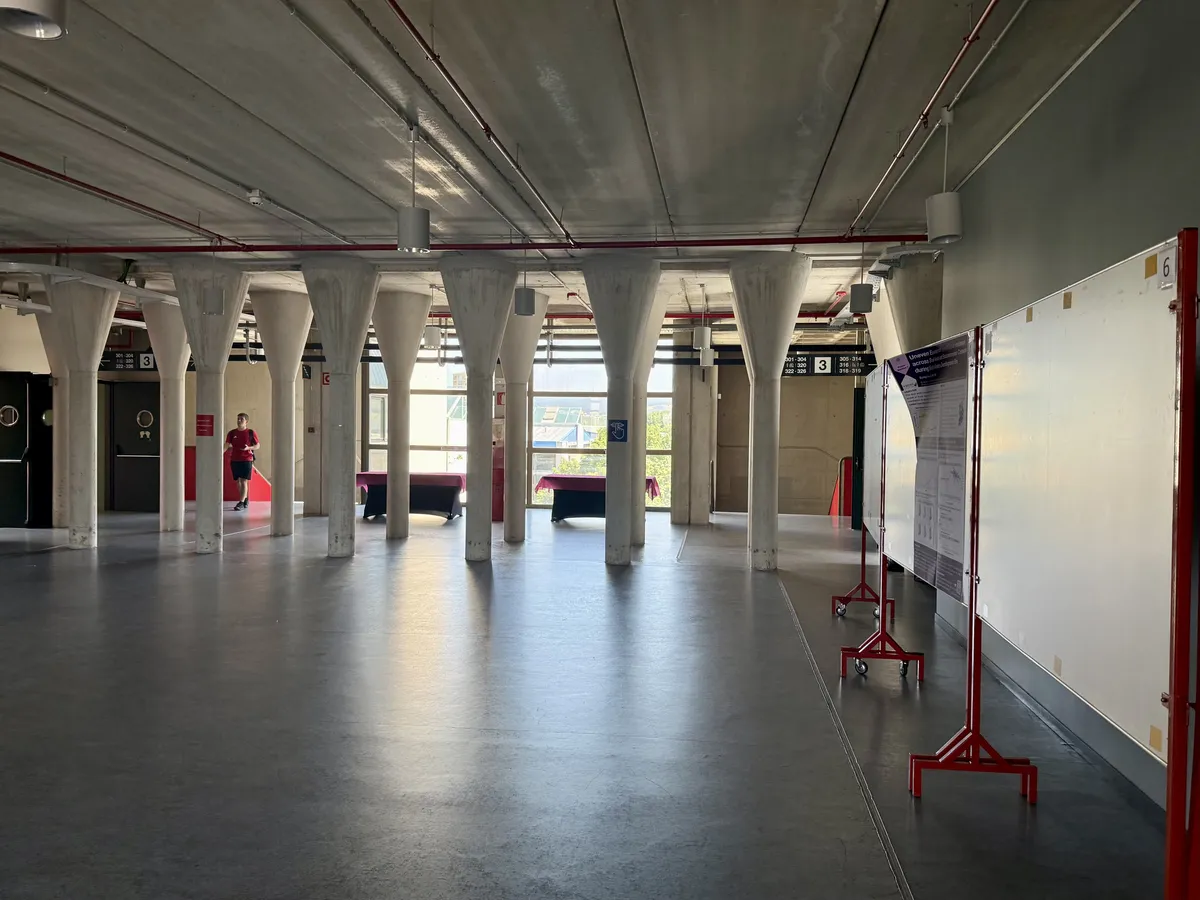
The building, and campus as a whole actually, employs 'brutalist' architecture, and I did not know this because I have a vast architectural knowledge base, I knew it because it is the word that struck me when I was inside this building -- 'brutal'. I am constantly visualizing myself falling and losing a bunch of teeth in a bloody mess. All surfaces appear very unforgiving. At first I thought well maybe this sort of design is more energy efficient, however upon investigation, and now experience, I have learned that not to be true.
The style of 'Brutalism' emerged in the 1950s-70s, with the name actually coming from the French béton brut — "raw concrete", which is nicely literal I suppose. The philosophy behind the design aesthetic was transparency: architects wanted to be honest about materials and structure rather than dressing buildings up with ornamental facades. If a building is made of concrete, let it look like concrete — exposed, unpolished, structurally legible. It was mixed in/influenced by post-war modernist ideals about transparency, function over decoration, and often an egalitarian sensibility, which is why it is seen so often in public buildings of that era: universities, government offices, social housing, civic centers. There was a practical impetus as well - concrete was cheap, fast to pour at scale, and durable with relatively low maintenance, making it well-suited for the massive expansion of higher education happening across Europe in that period, when countries were building or expanding universities quickly to meet growing student populations.
Spain's version of brutalism came slightly later than Britain's or France's, taking off post-1975 into the 80s. UPNA, founded in 1987, sits right in that time period - it was a sensible, cost-effective, and durable choice for a new public university campus.
And on the idea of thermal efficiency: in practice, brutalist buildings are often notorious for being thermally inefficient by today's standards — poor insulation, condensation problems, and a reliance on mechanical heating and cooling that isn't always well integrated into the original design.
So, in summary: it's hot, once was practical, and visually a bit unnerving -- I am walking around very carefully.
Café Iruña
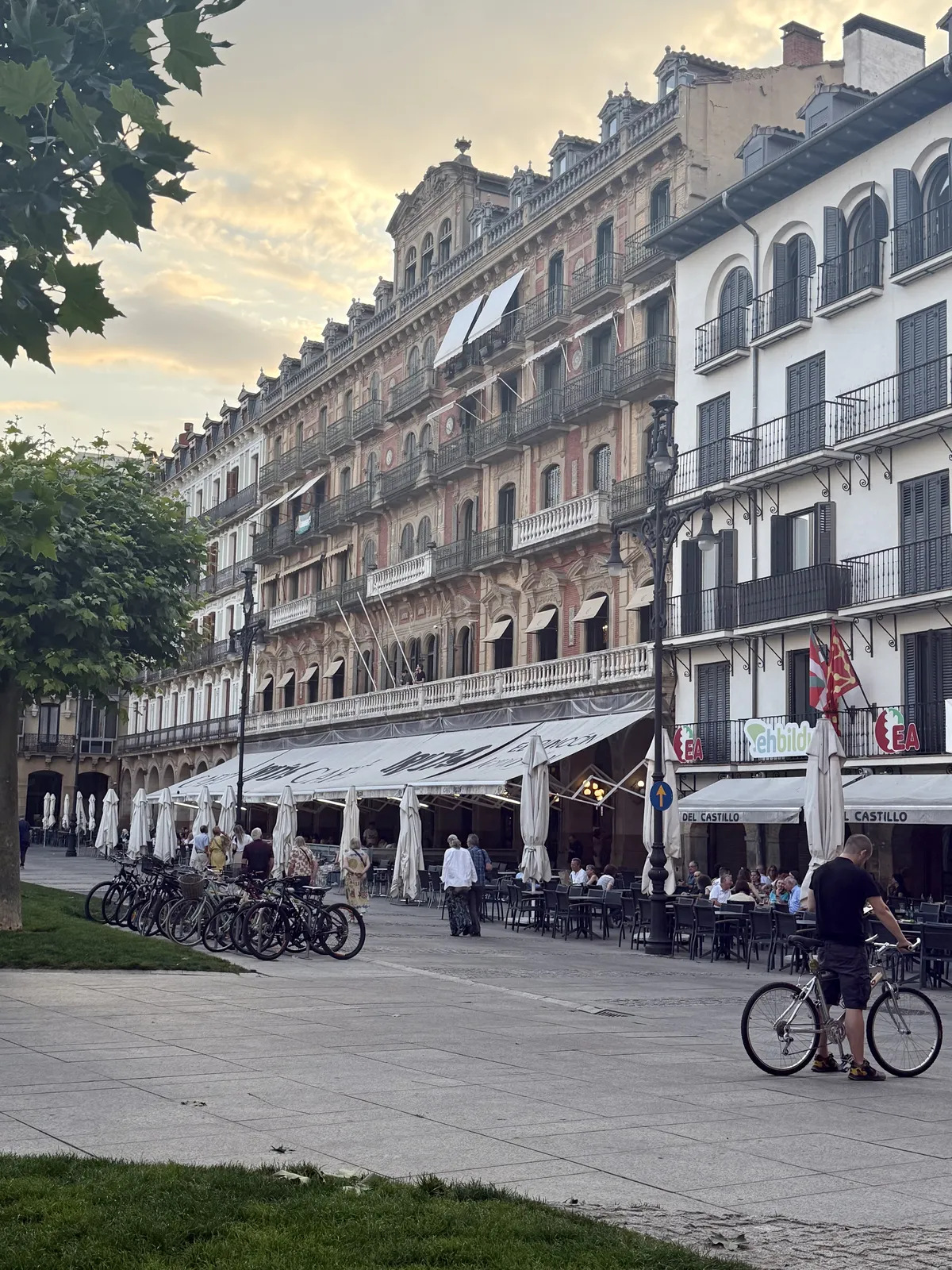
The welcome reception for GEOMED tonight was at oldest cafe in Pamplona and the first establishment to have electricity in Pamplona (1888) - the historic Café Iruña. It's just a stone's throw from where I am staying at Hotel La Perla. It became famous in part due to its association with Ernest Hemingway (another Hemingway thing), who featured it in his novel "The Sun Also Rises". There is a life‑size bronze statue of that Hemingway guy seated at a table inside the café.
Buenas noches!