an experiment in spain - day 2: hola pamplona
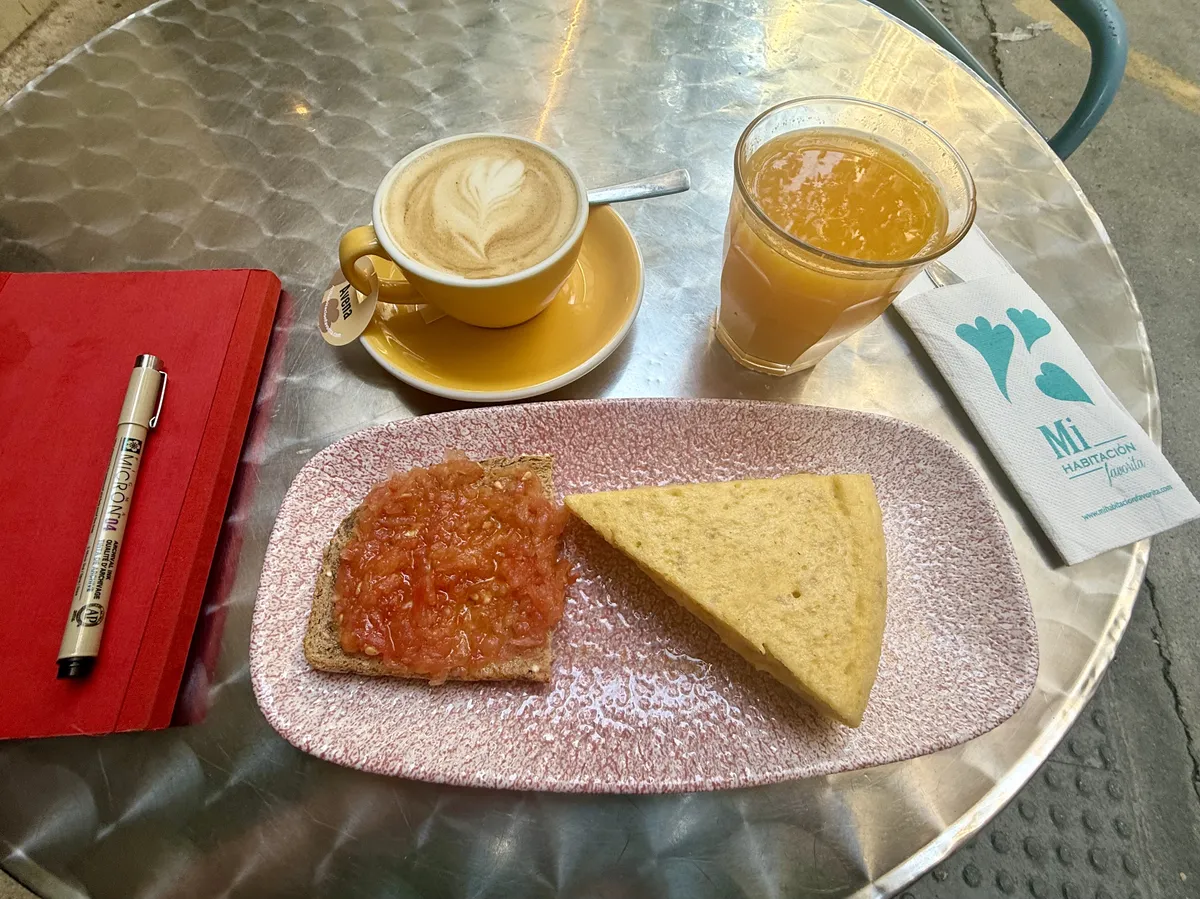
I had breakfast at ‘Mi Habitacion Favorita’, or “My favorite room’ and thought sitting at one of the sidewalk tables would be nice. And I'm glad I did because "nice" is what people hope; what I got was real. Delivery trucks pulling up a mere 2 feet away, street sweepers going by, construction workers hoisting things, occasional apologies, a woman asking for my breakfast literally as soon as it was set down. The real spice of life.
The food was delicious in any case. I had a “Spanish torte”, which was some sort of eggs and potatoes, with a piece of toast that had this really fresh tomato spread on it, which I transplanted on to my torte, with some fresh orange juice (sickness away!) and a cafe con leche.
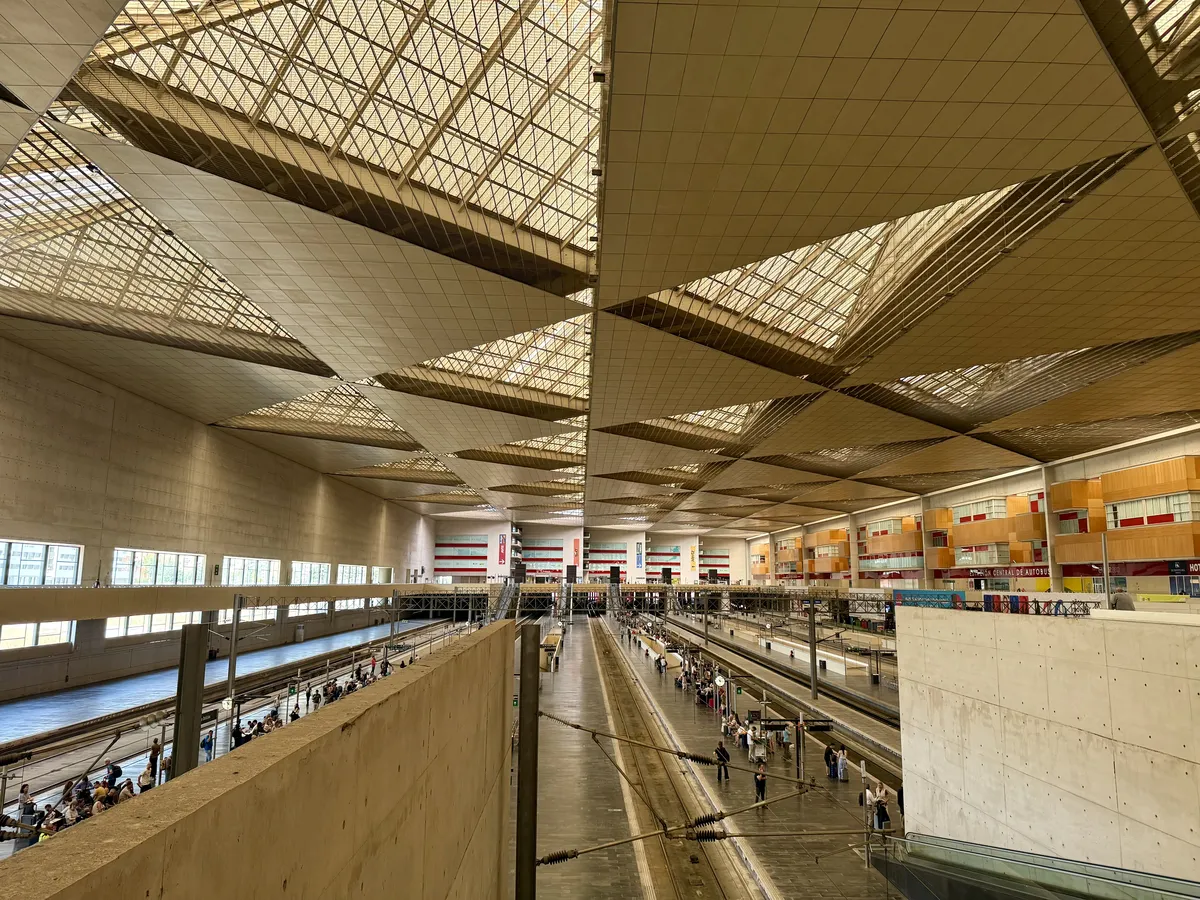
catching a train
My train to Pamplona was delayed about an hour and I am frankly a bit surprised I ended up in the right place. It was a bit chaotic, and I do not speak Spanish, and all announcements were in Spanish as one would expect. To be fair, everyone, Spanish included, was confused. I did a lot of triple checking and found the right train eventually. It was a neat train station.
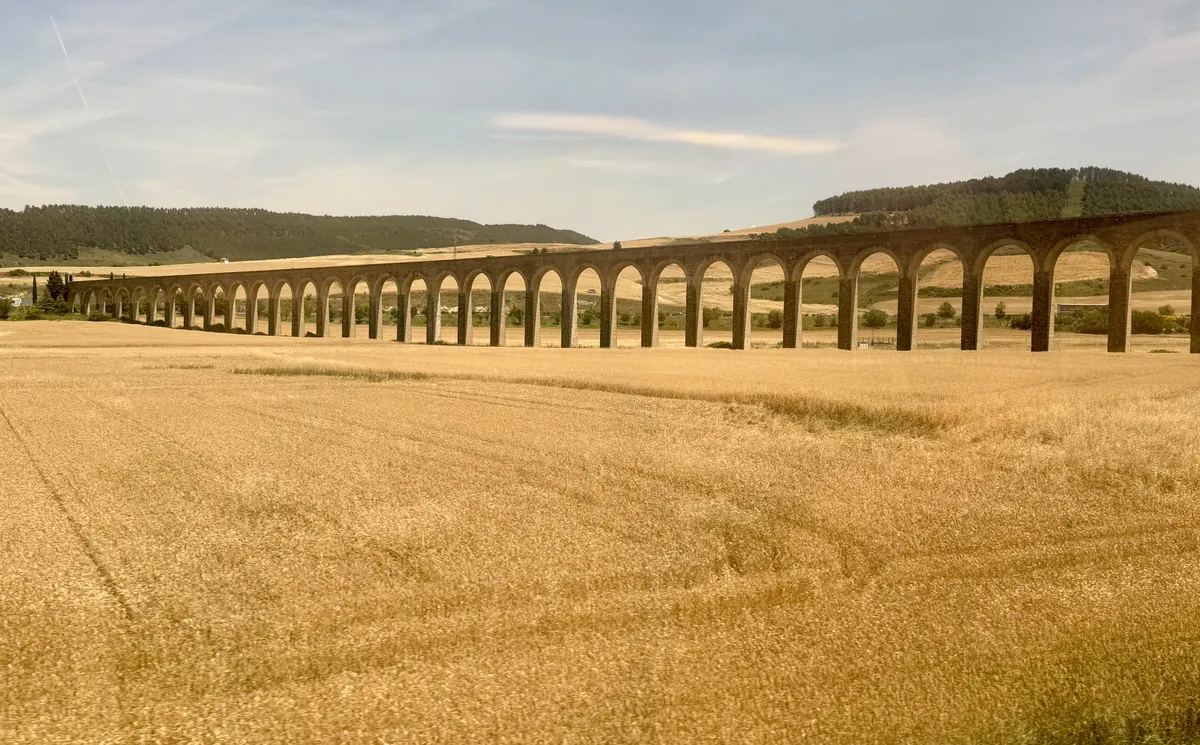
Once an aqueduct?!
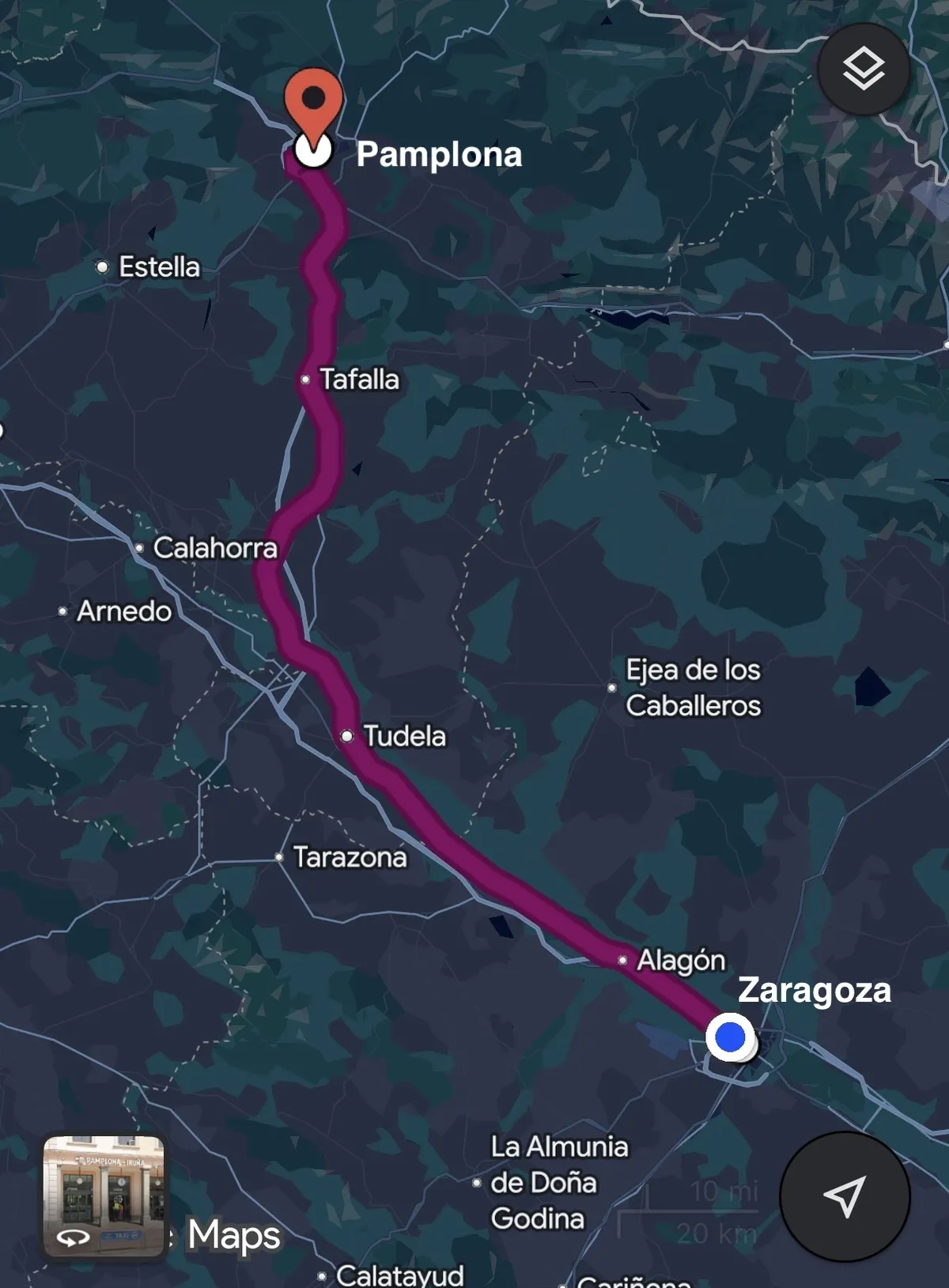
The route:
Pamplona
Civilization-wise, Zaragoza is old. Pamplona is even older.
Ancient and Roman origins: The city was founded by the Roman general Pompey around 75 BC during the Sertorian War, which is where the city name comes from — Pompaelo, “Pompey’s town.” It sat at a strategic crossing point and quickly became an important Roman settlement in the region.
Kingdom of Navarre: Pamplona’s real significance comes from its role as the capital of the Kingdom of Navarre, one of medieval Europe’s most enduring independent kingdoms. Navarre managed to remain its own sovereign entity for centuries, straddling the modern French-Spanish border, with Pamplona as its political and religious center. The kingdom only fully merged into the Spanish crown in 1512, much later than most of the rest of Spain unified — which is a big part of why Navarre and the Basque Country still maintain such a distinct cultural identity, language, and even tax status today.
The walls and citadel: Much of what makes the old town so atmospheric - the dense, walkable street grid, the fortifications — comes from Pamplona’s role as a heavily defended frontier city for centuries, caught between French and Spanish interests. The star-shaped Citadel, built in the 16th century, is one of the best-preserved Renaissance military structures in Europe and is now a park.
The Camino de Santiago: Pamplona has long been a major waypoint on the Camino de Santiago, the medieval pilgrimage route to Santiago de Compostela. Pilgrims have walked through the old town for over a thousand years, which is part of why the city has such a strong tradition of hospitality toward travelers.
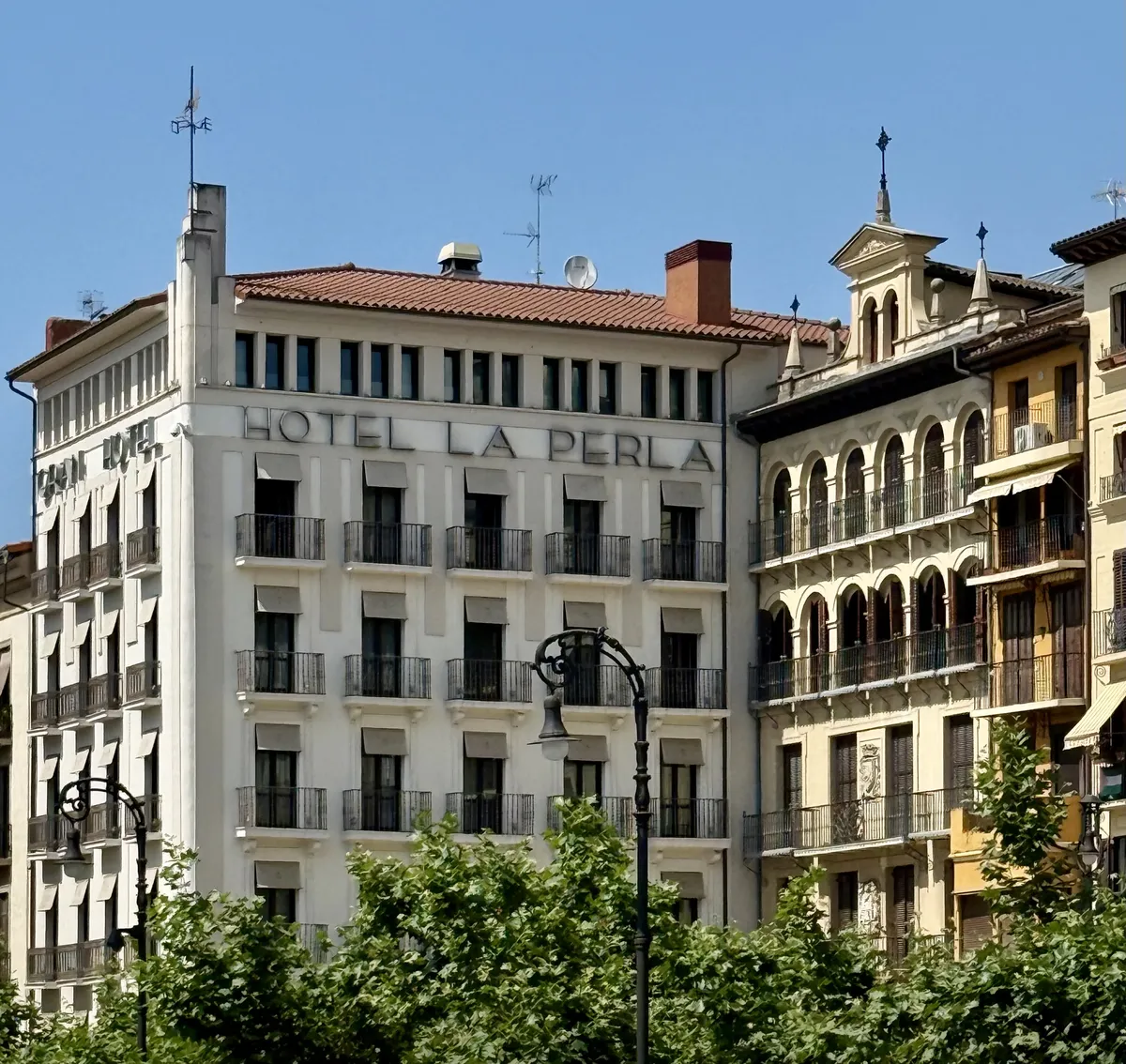
Hemingway and the bulls: The modern global association with Pamplona is, of course, the Running of the Bulls during the Feast of San Fermín, which starts July 6th — just two weeks after I leave. Ernest Hemingway made it world-famous in The Sun Also Rises (1926), and the Gran Hotel La Perla, where I'm staying, is where he actually wrote much of it.
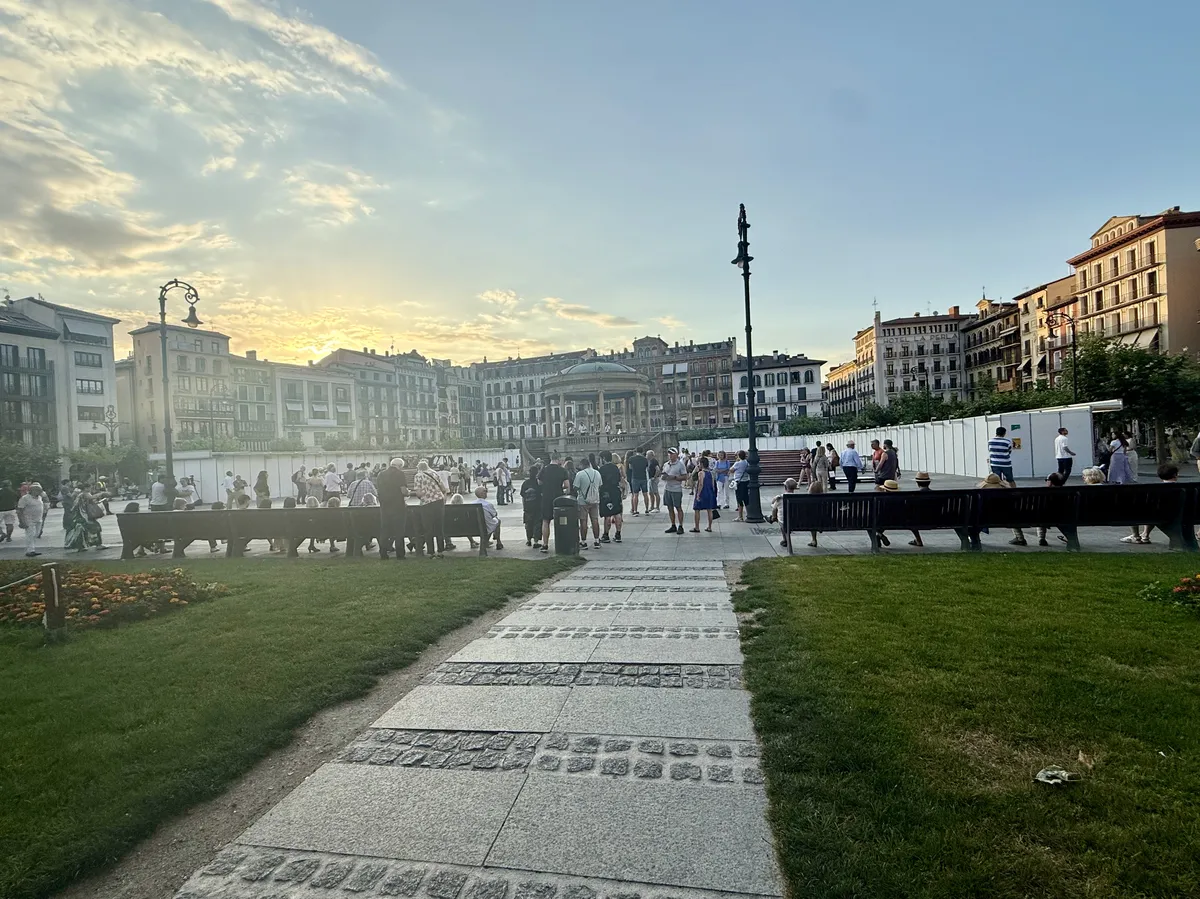
dancing in the square
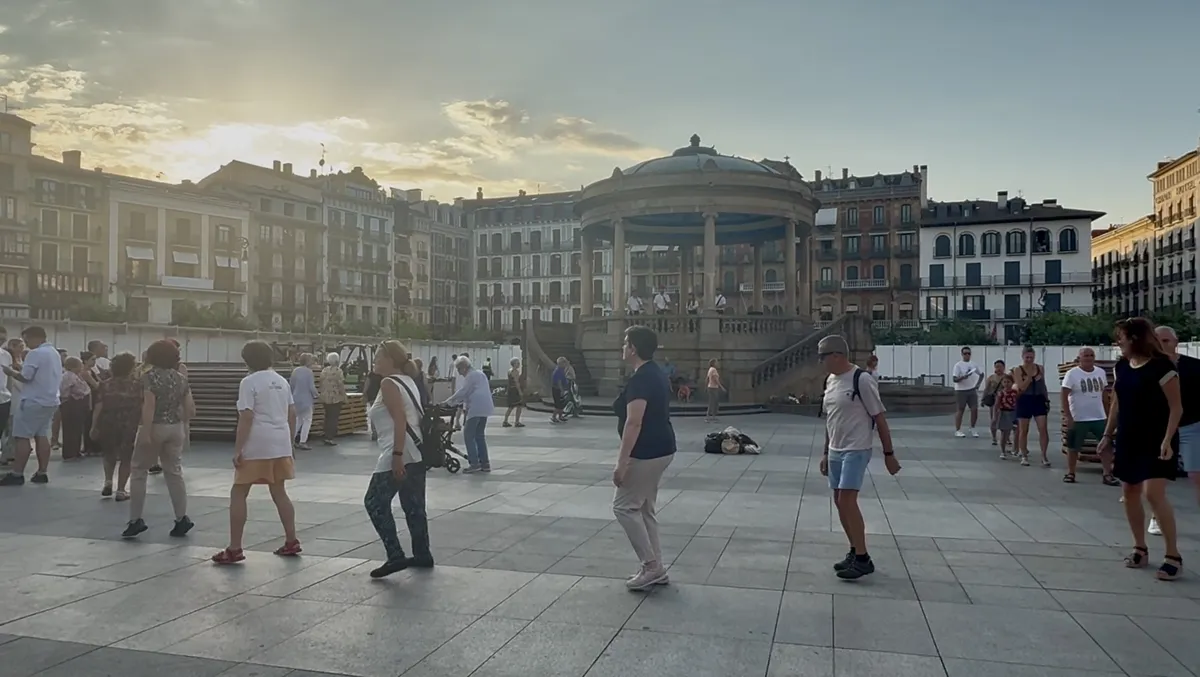
Tonight, I ate at a restaurant in the Plaza del Castillo, the same square as my hotel (it was Italian, I was starving and craving pizza, it was good no great shakes to repprt) and heard music start to play. Once I was done with dinner, I moseyed over to find some local musicians playing up in a gazebo while locals (I assume) proceeded to dance known steps like line dancing. My favorite was the woman dancing with a walker - can you see her?! She was having an absolute ball.
Buenas noches! Tomorrow -- GEOMED begins!